

Why Miami Beach Properties Outperform in Q1 (And What That Means for Owners)
Here’s what most property owners miss: Q1 isn’t just strong in Miami Beach—it’s disproportionately strong. And understanding why changes everything about how you should think about your investment.
The Numbers Don’t Lie
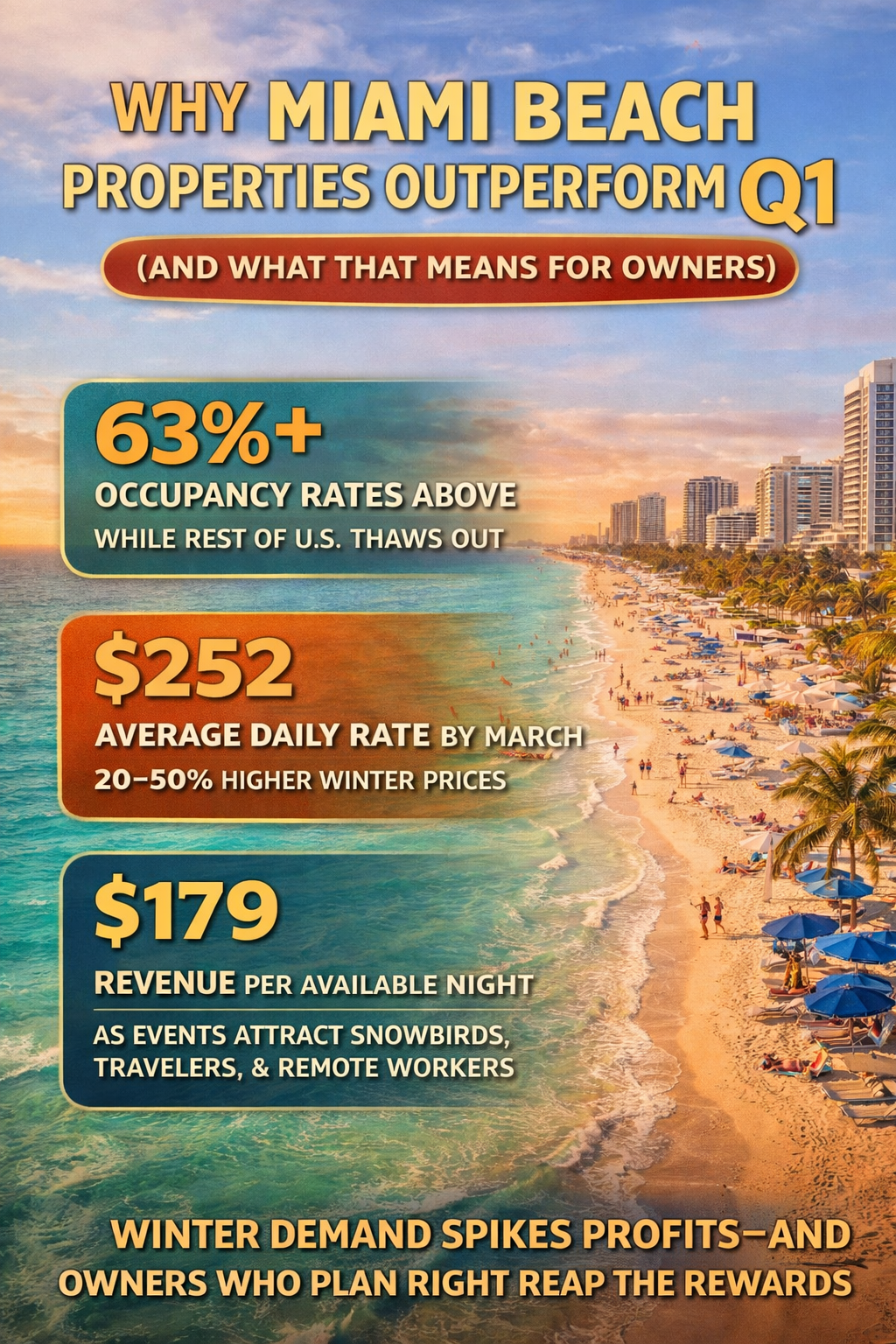
While the rest of the country is shoveling driveways, Miami Beach vacation rentals are hitting occupancy rates above 63% with average daily rates climbing to $252 by March. Revenue per available room peaks at $179 during this window. This isn’t luck—it’s geography meeting global migration patterns at exactly the right moment.
Winter rental prices in Miami Beach routinely run 20–50% higher than off-peak months. A condo that rents for $2,500 in summer can command $5,000 during peak season. That’s not a markup; that’s market reality when thousands of people are willing to pay premium rates to escape 20-degree weather in New York or Michigan.
The Snowbird Effect—But Bigger
Everyone knows about snowbirds. What they don’t know is how dramatically this demographic has evolved.
Today’s seasonal renters aren’t just retirees—they’re remote workers extending “bleisure” trips, international travelers from Europe and Latin America chasing the sun, and families building entire winter routines around Miami Beach. The modern snowbird books two to three months in advance, stays seven to fourteen nights, and expects luxury-level amenities. They’re not just filling units; they’re driving a premium market.
January through March captures the highest concentration of this demand, creating what industry data calls “Miami’s most profitable window.” Properties closer to beaches or with water views command the steepest premiums—because when you’re paying to escape winter, proximity to the ocean isn’t negotiable.
The Event Multiplier
Then there’s the event calendar. Art Basel in December spills momentum into January. The Miami International Boat Show in February brings affluent buyers and industry professionals. Spring break surges in March. Each event creates demand spikes that layer on top of baseline seasonal traffic.
Smart property managers adjust pricing around these moments—not just raising rates, but implementing minimum stay requirements and premium positioning that captures maximum value during compressed high-demand windows. Miss this strategic window, and you’re leaving thousands on the table.
What This Actually Means for Owners
If your Miami Beach property generates 40% of its annual revenue between January and March, you’re not an outlier—you’re typical. This concentration creates both opportunity and risk.
The opportunity: Optimize everything for Q1. Renovations should be completed by December. Listings should be refreshed with updated photos before the booking season opens in October. Pricing strategies need dynamic adjustment based on real-time occupancy and competitor analysis. The properties that capture Q1 demand are the ones that were prepared for it months earlier.
The risk: Over-reliance on a single quarter means summer and fall performance matters more than owners realize. Properties that go dark from June through September aren’t just losing revenue—they’re losing algorithmic visibility on booking platforms. The year-round strategy should balance premium Q1 pricing with strategic summer positioning that keeps units occupied and rankings high.
The Competitive Reality
Here’s the uncomfortable truth: Miami Beach has one of the largest short-term rental markets in the U.S., and supply keeps growing. New condos, professional management companies, and corporate operators are entering constantly. If demand doesn’t keep pace, ADR compresses.
Q1 outperformance isn’t guaranteed—it’s earned. The properties winning this quarter are the ones with professional photography, rapid response times, five-star guest experiences, and pricing that adapts daily based on market conditions. Static pricing loses. Every time.
The Forward Move
Understanding Q1’s dominance should reshape how you think about your Miami Beach investment. This isn’t a property that performs evenly across twelve months—it’s one with a concentrated earnings season that demands concentrated attention.
Book your high-season strategy early. Invest in the details that differentiate your listing. Work with management that understands dynamic pricing and can capture those 20–50% premiums when they appear. And recognize that Miami Beach’s Q1 advantage isn’t just about weather—it’s about being in the exact place where global demand concentrates when it matters most.
MRMVR specializes in vacation rental management across Miami, with deep expertise in Miami Beach’s unique market dynamics. We understand Q1’s revenue potential because we’ve built pricing strategies around it for years—combining dynamic rate optimization, event-based positioning, and year-round occupancy planning that maximizes returns across all four quarters. Whether you’re evaluating a new investment or looking to improve existing property performance, we approach Miami Beach management with the data-driven precision this market demands.